
Why Digital Nomads Fear Online Visibility |
Discover why digital nomads fear online visibility, how privacy becomes hiding, and how trusted visibility builds real trust with clients online today. |
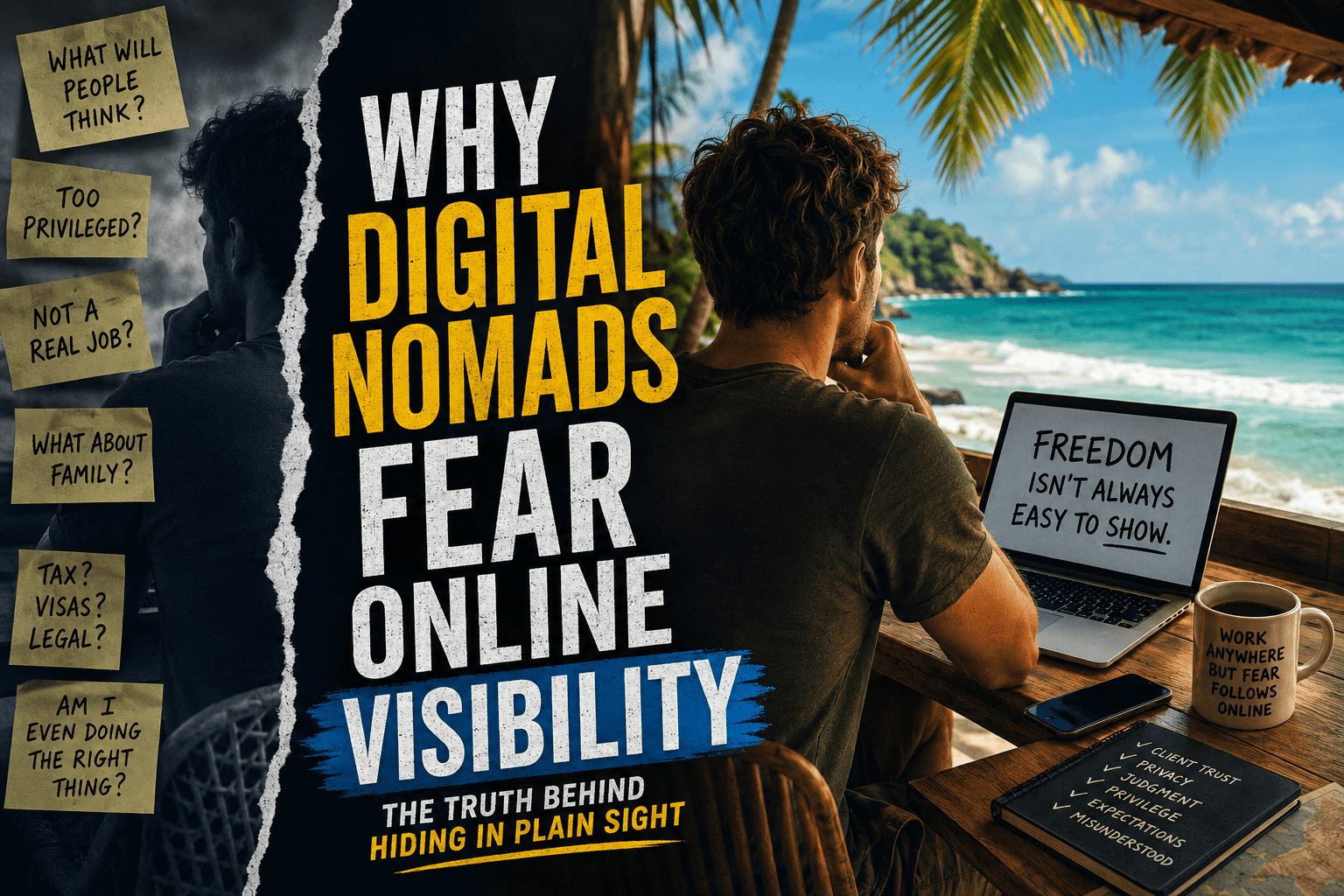 |
Why Digital Nomads Fear Online VisibilityDigital nomads fear online visibility for reasons most people miss. From the outside, they look free. They post laptops, beaches, airports, and neat little coffee cups. But many still fear being truly seen online. Not just noticed. Seen. That means showing their face, story, work, prices, values, mistakes, and ambition. And that fear is not silly. It is often smart, learned, and deeply human. Why Are Digital Nomads Afraid to Be Seen Online?Digital nomads are afraid to be seen online because visibility can expose their work, income, location, values, privilege, doubts, and lifestyle choices. Some protect privacy for good reasons. Others hide behind “strategy” because they fear judgment from clients, old friends, family, and strangers. Why This Argument About Digital Nomads Has WeaknessesLet’s start with the weakest part of this claim. Not every digital nomad is afraid to be seen online. Some are loud, proud, and very visible. They post daily. They share income reports. They film their lives like a small Netflix crew. Some build real trust through that openness. Others build huge brands from cafés, beaches, and rented flats. So no, fear is not the whole story. A fair critic would say this argument overstates the problem. They would say digital nomads are already everywhere online. They would point to YouTube, TikTok, Instagram, Substack, and LinkedIn. They would show you creators with huge audiences. They would say, “Afraid? They never stop posting.” That is a fair point. There is also another strong objection. Many digital nomads avoid online visibility for good reasons. They may want privacy. They may not want strangers tracking their location. They may work with clients who need quiet trust. They may not want tax, visa, or legal trouble. They may avoid public posts because it protects their family. That is not fear. That is judgment. Some nomads also dislike the fake side of creator culture. They do not want to perform freedom for likes. They do not want every meal to become “content.” They do not want their life flattened into a carousel. Again, that is not weakness. That is taste. A smart reader could reject this whole piece. They could say the issue is not fear. They could say the issue is bad incentives. They could say platforms reward shallow posts. They could say private people owe nobody a public life. They would be right about much of that. Here is the best evidence against my view. The most visible nomads often get the most attention. They attract clients, partners, friends, and travel invites. They also shape the public image of remote work. So visibility clearly works for many people. Another counterpoint is simple. Digital nomads are not one tribe. A freelance designer in Lisbon differs from a founder in Bangkok. A retiree in Mexico differs from a coach in Bali. A developer in Warsaw differs from a writer in Chiang Mai. One neat theory cannot explain all of them. That matters. A reasonable person might disagree with my conclusion. They might say nomads are not afraid. They are just busy, careful, private, or tired. They might say online visibility is overrated. They might say the quiet ones are often doing better. I agree with much of that. But here is the harder truth. Even after all those objections, fear still sits underneath. It may wear smarter clothes. It may call itself strategy, privacy, or taste. Sometimes those labels are honest. Sometimes they are not. And that is where the real story begins. Why Experienced Digital Nomads Distrust Visibility AdviceThe hardest reader is not a beginner nomad. It is the experienced one. They have lived in five countries. They have seen the Bali hype machine. They know the tax talk gets messy. They have watched “freedom” influencers sell thin courses. They have met loud people with weak businesses. They have also met quiet people with strong lives. This person distrusts any simple answer. They expect this piece to blame fear too quickly. They expect lazy lines like “just show up.” They expect hustle talk wrapped in soft words. They expect personal branding advice from someone selling visibility. They also expect key facts to be ignored. They expect me to ignore safety. They expect me to ignore burnout. They expect me to ignore platform noise. They expect me to ignore visa problems. They expect me to ignore privacy. They expect me to ignore cultural differences. They expect me to ignore class and money. They expect me to ignore gendered risk. They expect me to ignore online abuse. They are waiting for the usual trick. That trick is common. A writer names fear. Then they sell courage. Then they call every private person “blocked.” That is cheap work. We are not doing that here. The stronger point is more careful. Many digital nomads are not afraid of posting. They are afraid of being fixed in public. They fear being judged by old friends. They fear being misunderstood by new clients. They fear becoming a brand before becoming a person. They fear being seen as shallow. They fear being seen as privileged. They fear being seen as lost. They fear being seen as trying too hard. That fear is not always loud. It often hides behind clever reasons. And yes, some of those reasons are valid. That is what makes this problem so sticky. Why Online Visibility Feels Risky for Digital NomadsFor office workers, identity used to be simpler. You had a job title. You had an office. You had a town. You had a routine. People knew roughly where to place you. Digital nomads break that old map. They live between places. They work between time zones. They often earn in one country. Then they spend in another country. They date, rent, learn, and move in public. That makes visibility more loaded. A normal post can feel like a confession. “Here is where I live now.” “Here is how I earn.” “Here is why I left.” “Here is what I chose instead.” Those are not small things. They can stir envy, doubt, anger, and concern. A beach photo may look smug to one person. A work post may look fake to another. A rent update may look tone-deaf back home. A visa question may invite unwanted opinions. So many nomads keep things vague. They post scenery, not self. They post coffee, not clients. They post tips, not beliefs. They post motion, not meaning. This keeps them safe. But it also keeps them thin. The person appears online. The real person stays hidden. That gap becomes tiring over time. It is like wearing sunglasses indoors. It works for a while. Then everyone knows something is off. Why Digital Nomads Fear Looking PrivilegedThis fear is real. Many nomads know their lifestyle can look unfair. They may earn Western rates. They may live in cheaper places. They may enjoy choices others do not have. They may move because their passport allows it. That truth can make visibility feel awkward. Nobody wants to sound like this. “Look how free I am.” Especially when others cannot leave. That guilt can silence people. It can also make their posts oddly bloodless. They talk about Wi-Fi speed. They avoid talking about money. They show sunsets. They avoid talking about local costs. They praise “freedom.” They skip the systems that made it possible. This is where fear and honesty clash. The answer is not hiding. The answer is better truth. A strong nomad voice can say this clearly. “I have real freedom, and real privilege.” “I worked hard, but I also had advantages.” “This lifestyle has costs for local places.” “I am learning how to do it with respect.” That kind of honesty is rare. It is also powerful. It lets people trust you. Not because you are perfect. Because you stopped polishing the mirror. A trustworthy digital nomad story does not hide the tradeoffs. It names them before the reader has to guess. Why Digital Nomads Fear Looking Fake OnlineDigital nomads know the stereotype. Laptop on beach. Passive income. Morning routine. Perfect skin. Endless freedom. No bad days. No receipts. That image has become tired. Many serious nomads hate being linked to it. So they avoid being visible at all. They do not want to look like a cliché. That is understandable. Nobody wants to become a walking stock photo. But hiding has a cost. The loudest people define the story. When thoughtful people stay quiet, shallow people fill the gap. Then the public picture gets worse. This is the old village problem. When sensible people leave the square, fools take the bench. That line sounds harsh. But it is true enough. Good visibility can repair a bad stereotype. Not with slogans. With details. Show the hard client call. Show the boring admin day. Show the tax bill. Show the lonely Sunday. Show the local language lesson. Show the failed plan. Show the real work behind the laptop. That does more than inspire. It makes the lifestyle believable. It also separates workers from performers. Why Digital Nomads Fear Judgment From HomeMany nomads still carry an old audience. Parents. Old friends. Former bosses. Schoolmates. People from their hometown. These people may not understand the life. They may see travel as escape. They may see freelance work as unstable. They may see moving often as childish. They may ask the same sharp questions. “When will you settle down?” “Is this a real job?” “Are you still doing that travel thing?” “Do you have a pension?” Some questions are fair. Some are just dressed-up fear. Either way, they sting. So nomads shrink their online selves. They post just enough to look fine. They hide enough to avoid a lecture. This is a quiet prison. The person left the old place. But the old place still edits them. That is the part nobody likes admitting. You can leave a town in one day. Leaving its judgment can take years. Visibility forces that reckoning. It asks a blunt question. Whose approval still owns your voice? That question is uncomfortable. It is also useful. Why Digital Nomads Struggle to Mix Business and Life OnlineDigital nomads often sell trust. They sell design, writing, coaching, code, consulting, or strategy. Their clients may be traditional. Their lives may look unusual. That creates a real tension. Should they show travel? Should they show personal views? Should they mention countries? Should they share lifestyle choices? Could a client judge them? Could a client think they are not serious? Could a client worry about time zones? Could a client think they are distracted? Those fears are not foolish. Some clients do judge quickly. Some still think office equals discipline. Some hear “nomad” and imagine chaos. So people overcorrect. They make their online presence stiff. They hide travel. They scrub personality. They sound like a brochure. Then nobody remembers them. The better answer is not oversharing. It is clean framing. Do not say, “I work from random beaches.” Say, “I run a remote-first business across time zones.” Do not say, “I escaped the system.” Say, “I built work around deep focus and mobility.” Do not hide your life. Translate it into trust. That is the grown-up move. Freedom needs structure. Otherwise, it looks like drift. A strong online presence helps clients see how you work. It should make your freedom feel reliable, not random. Why Digital Nomads Feel Too Late to Build a Personal BrandMany nomads also feel behind. They see others with newsletters, podcasts, and big followings. They see polished videos and strong personal brands. They think the game already ended. So they delay. They wait for a better angle. They wait for a better camera. They wait for a cleaner story. They wait until their life looks impressive. That day rarely comes. Life stays messy. Work stays uneven. Confidence comes and goes. The perfect public self keeps moving away. This fear often sounds practical. “I need a clearer niche.” “I need better photos.” “I need more proof.” “I need a proper strategy.” Sometimes that is true. Often it is a velvet rope around fear. The first honest post will feel awkward. The first video may feel awful. The first newsletter may feel too personal. That is normal. You do not become visible by feeling ready. You become ready by being visible. Old advice still holds here. Start small. Do it properly. Keep going. No fireworks needed. What Digital Nomads Really Fear People Will SeeThe fear is rarely about the camera. It is about what the camera might reveal. It might reveal they are still unsure. It might reveal their income is uneven. It might reveal their freedom has lonely edges. It might reveal they miss home. It might reveal they are not always productive. It might reveal they are still figuring things out. That is the hidden wound. Digital nomads are sold as people with answers. In truth, many are people with questions. They chose movement because stillness felt wrong. They chose remote work because offices felt narrow. They chose freedom before knowing its full price. That does not make them fake. It makes them human. But public life punishes mixed stories. Platforms love clean arcs. “I quit my job and found freedom.” “I moved abroad and built my dream life.” “I now earn more while working less.” Real life has duller chapters. “I left, but I still feel lost sometimes.” “I earn enough, but I worry often.” “I love travel, but I miss rooted friendships.” That truth is less shiny. It is also far more useful. The strongest digital nomad stories are not perfect. They are honest enough to help someone else feel less alone. Why Online Visibility Is Not the Same as OversharingSome advice gets this badly wrong. It treats visibility like a volume knob. Post more. Reveal more. Talk more. Be bolder. That can backfire fast. Not every truth belongs online. Not every wound needs an audience. Not every opinion helps your work. Not every private moment should become content. The cure is not exposure. The cure is honest control. Choose what you want to be known for. Choose what you will keep private. Choose what your audience needs. Choose what your future self can stand behind. Then show up within those lines. That is not cowardice. That is craft. A carpenter does not use every tool at once. A good public life also needs restraint. Digital nomads need that restraint more than most. Their lives cross homes, work, love, money, and law. A sloppy post can create real trouble. So the goal is not reckless visibility. The goal is trusted visibility. There is a big difference. What Trusted Visibility Looks Like for Digital NomadsTrusted visibility is not loud. It is clear. It says what you do. It says how you think. It shows your standards. It explains your tradeoffs. It admits what is hard. It avoids pretending every day is magic. For a digital nomad, that may look simple. Share one real work lesson each week. Share one honest travel lesson each month. Share what a place taught you. Share how you protect client trust. Share what you no longer glamorize. Share the mistake before the polished lesson. This builds a fuller picture. You become more than a location. You become a person with judgment. That is what clients, readers, and peers trust. Not perfection. Judgment. The best online presence has old-fashioned bones. Keep your word. Name your limits. Show your work. Respect your host places. Do not sell what you cannot prove. Use new tools. Keep old standards. That mix still wins. It has always won. Why Digital Nomad Visibility Fears Will Not Vanish SoonDigital nomads will stay afraid of being seen. Not all of them. But many. The fear makes sense. The internet has a long memory. People judge without context. Platforms reward nonsense. Governments, clients, and strangers may watch. Family members may misunderstand. Local people may resent careless outsiders. That is the honest landscape. But hiding forever creates another problem. It leaves the story to people with fewer scruples. It keeps serious nomads isolated. It makes good work harder to find. It turns freedom into something half-lived. The better path is not constant posting. It is braver editing. Say the useful thing. Show the real work. Admit the tradeoff. Protect what should stay private. Then repeat. That is not flashy. It is stronger than flashy. Be Seen Online Without Performing FreedomDigital nomads fear online visibility for good reasons. Some reasons are wise. Some are old fear in a neat coat. The trick is knowing which is which. Privacy protects you. Shame shrinks you. Strategy gives you room. Avoidance steals your voice. So do not chase attention. Do not become another laptop-on-beach mascot. Do not turn your life into a sales funnel. But stop hiding the parts that build trust. Show your work. Tell the truth. Name the costs. Respect the places that host you. Let people see a real person, not a travel poster. That is how digital nomads earn trust online. Not by looking fearless. By being honest enough to be believed. Post one honest thing today that shows the work behind the life. |
 |
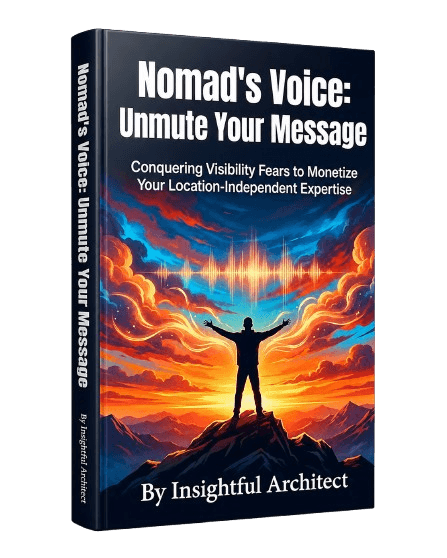 |
Unlock the power of your voice and amplify your impact with Nomad's Voice: Unmute Your Message. This groundbreaking e-commerce product will help you conquer visibility fears, allowing you to monetize your location-independent expertise like never before. Say goodbye to feeling unheard and invisible - this guide will show you how to step into the spotlight and make your mark in the digital world. Whether you're a seasoned nomad or just starting out, this book is your key to reaching new heights of success. Don't let your talents go unnoticed - unleash your voice today and watch your influence soar. |