
7 Reasons Purpose Without Blind Faith Is Safer |
Choose purpose without blind faith and see why tested meaning, service, and doubt may be safer than drifting through life with no clear direction today. |
 |
7 Reasons Purpose Without Blind Faith Is SaferPurpose without blind faith is not wishful thinking. It is a way to live with direction. You do not need blind faith to live with purpose. But you do need something stronger than drift. Many people reject faith because they fear being fooled. That fear makes sense. Nobody wants to hand their mind to a loud preacher. Nobody wants to build life on wishful thinking. But here is the sharper question. What do you lose by staying detached forever? That is the real risk. Can you find purpose without blind faith? Yes. You can find purpose without blind faith by choosing clear values, testing them through action, and staying honest about doubt. Purpose does not require blind belief. It requires direction, service, courage, and steady habits that give your life shape. Why Skeptical People Fear Purpose And FaithThe hardest person to reach is not lazy. They are often sharp, careful, and proud of clear thought. They may have seen religion used badly. They may have seen guilt, control, fear, or fake certainty. So they hear “purpose” and smell a trap. They think purpose means surrender. They think belief means losing their freedom. They think meaning is just a story people tell themselves. Here is what they fear losing if they agree. They fear losing their edge. They fear looking naive. They fear joining a group they do not trust. They fear being trapped by rules they did not choose. They fear becoming the person they once pitied. But here is what they lose if they are wrong. They may lose years of focused living. They may lose courage when pain hits. They may lose deep bonds with people who share direction. They may lose the chance to build something beyond comfort. They may lose the quiet strength that comes from chosen meaning. That is not a small bill. That is the kind of bill life collects slowly. Purpose Without Blind Faith Is Not A SermonThis is not a sermon. It is not a demand to accept a creed. It is not about proving God, fate, or heaven. It is about risk. More exactly, it is about uneven risk. Some choices have poor odds and huge cost. Other choices have small cost and huge possible gain. Purpose without blind faith sits in the second group. You can test it without losing your mind. You can practice it without joining a cult. You can seek meaning without pretending doubt vanished. This article does not ask you to stop thinking. It asks you to stop drifting while you think. That matters. Blind faith says, “Do not ask questions.” Purpose says, “Ask better questions, then live well.” Those are not the same thing. One shuts your eyes. The other asks you to open them. What Purpose Without Blind Faith Really MeansPurpose without blind faith means chosen direction. It means you stop living like a loose shopping bag. The wind should not run your life. You pick values and act on them. You serve something larger than your mood. You build habits that match your best self. That could mean raising kind children. It could mean writing honest work. It could mean caring for ageing parents. It could mean teaching, building, healing, or protecting. It could mean leaving things better than you found them. You do not need blind faith for that. You need humility, courage, and steady action. You need enough belief to move. You also need enough doubt to stay honest. Viktor Frankl, the psychiatrist and author of Man’s Search for Meaning, saw meaning as central to human strength. He did not treat purpose as soft decoration. He treated it as something people need under pressure. That balance is not weakness. It is grown-up living. How To Find Meaning Without CertaintyLet us map the risk clearly. First, what if this view is right? You can find purpose without blind faith. You can build meaning through service, truth, love, craft, and duty. You can act before perfect certainty arrives. If you do that, you gain direction. You wake up with clearer choices. You waste less time on empty noise. You choose friends with better care. You stop chasing every shiny thing. You become harder to break. That is a serious gain. Now ask the second question. What if this view is right, and you dismiss it? You may spend years waiting for certainty. You may call that wisdom. But it may really be fear in a clever coat. You may avoid commitment. You may avoid love because loss hurts. You may avoid service because cynicism feels safer. You may avoid hope because hope can embarrass you. Years later, the cost becomes clear. You protected yourself from being fooled. But you also protected yourself from being formed. That is a rough trade. The Hidden Cost Of Living Without PurposeThe cost is not dramatic at first. Nobody wakes up one day and says, “I wasted my purpose.” It happens in small cuts. You scroll instead of building. You mock instead of joining. You watch instead of helping. You analyze instead of acting. You keep your options open. Then your options quietly close. A decade can vanish this way. Not with disaster. With drift. That is the danger. Disbelief often feels safe because it asks little today. It says, “Wait until you are sure.” It says, “Do not risk looking foolish.” It says, “Stay above it all.” But life does not pause for your proof. Your body ages. Your parents age. Your chances narrow. Your habits harden. Your heart learns what you teach it. If you teach it distance, it becomes distant. What You Gain From Tested PurposeNow picture the other path. You do not accept blind faith. You do not fake certainty. You simply choose a purpose worth testing. For example, you decide to serve your family better. You call your mother every Sunday. You help your neighbour without posting about it. You spend one hour daily on honest work. You stop laughing at people who care. You join a cause with clear local value. You give time, not just opinions. After six months, life feels different. Not perfect. Different. You have fewer empty evenings. You have more earned pride. You have people who trust you. You have work that points somewhere. You still have doubts. But now your doubts walk beside action. They no longer sit on your chest. That is not blind faith. That is disciplined hope. What You Lose When You Dismiss MeaningSome losses can never be fully repaired. A missed calling is one of them. You can start late, of course. Late is better than never. But some seasons do not return. A child’s early years do not repeat. A parent’s final decade does not reset. A community need may pass unmet. A talent ignored too long may shrink. A friendship not tended may fade. A book unwritten may die inside you. These are not abstract losses. They are painfully plain. The call you never made. The apology you kept delaying. The work you kept “thinking about.” The person you could have helped. The courage you never trained. Purpose gives weight to those moments. Without it, they look optional. They are not optional. They are your life. What If Purpose And Meaning Are Wrong?Now let us be fair. What if this whole approach is wrong? What if purpose is just a useful story? What if no grand meaning waits behind life? What if the universe is silent? Fine. What is the downside of acting with purpose anyway? You may spend your life helping people. You may build strong habits. You may love with more care. You may waste less time. You may leave useful work behind. You may become more honest, brave, and kind. That is the loss? That is not much of a loss. It sounds like a decent life. The real downside is smaller than skeptics pretend. You might be wrong about meaning. But you still become the kind of person people need. That is a good bargain. Even if the stars do not applaud. Why Blind Faith Is Not The Same As PurposeThe danger comes from blind faith, not purpose. Blind faith can make people cruel. It can make people certain without wisdom. It can make them ignore facts. It can make them excuse harm. That is why blind faith deserves caution. But purpose without blind faith avoids that trap. It keeps the door open to evidence. It keeps your conscience awake. It lets you revise bad beliefs. It lets you admit mistakes. It asks for action, not mental surrender. That is a sane middle path. You can believe in service without being gullible. You can believe in duty without being rigid. You can believe in hope without lying. You can believe in love without turning soft. Belief does not have to blind you. Good belief gives your eyes a job. Why Skepticism Alone Cannot Give You PurposeSkepticism is useful as a tool. It is terrible as a home. A hammer helps you build. But nobody wants to live inside a hammer. Skepticism can test false claims. It can expose bad leaders. It can stop foolish choices. That is all good. But skepticism cannot tuck a child into bed. It cannot bury a parent with grace. It cannot forgive a friend. It cannot build a school. It cannot hold a marriage together. It cannot give your suffering a task. For that, you need commitment. You need care. You need a reason to keep going. Skepticism can clear the ground. Purpose plants the tree. Do not confuse the shovel with the garden. Why Risk Management Favors PurposeThe rational move is not endless doubt. The rational move is tested purpose. Choose a direction with low downside and high upside. Then live it hard enough to learn from it. That is how wise people handle uncertain ground. Farmers do not demand perfect weather before planting. They read the sky, prepare the soil, and act. Sailors do not wait for a wind guarantee. They check the lines, trim the sails, and move. Purpose works the same way. You do not need total certainty. You need enough truth to begin. You also need enough courage to continue. The skeptic thinks action requires proof. But much of life works the other way. Proof often comes after action. Trust grows after loyalty. Skill grows after practice. Meaning grows after service. A 30-Day Test For Finding PurposeTry this for thirty days. Pick one purpose that costs something small. Make it clear and practical. Do not pick a grand slogan. Pick an action. For example:
Do it without drama. Do it without posting every step. Do it even when doubt appears. At the end, ask honest questions. Did your life feel more solid? Did your time feel less scattered? Did your mood become less bossy? Did people trust you more? Did you respect yourself more? That is evidence. Not perfect evidence. But better than armchair doubt. Why Commitment Feels Risky To SkepticsMany people say they fear being wrong. Often, they fear being changed. Purpose asks something from you. It asks you to stop hiding behind taste. It asks you to stop treating life as content. It asks you to become useful. That can feel threatening. A detached person can always stay clever. A committed person can fail in public. That is scary. But it is also where life gets real. You cannot build a marriage from the balcony. You cannot raise children from theory. You cannot serve a town through sarcasm. You cannot master a craft by admiring tools. At some point, you step in. You risk effort. You risk care. You risk being seen. That risk is worth taking. Why The Safe Choice Is Not Actually SafeThe skeptic’s safe choice looks calm. But it carries a quiet danger. You may avoid false belief. But you may also avoid deep life. You may dodge bad religion. But you may also dodge good duty. You may escape being used. But you may also never become needed. That is the asymmetry. Acting with purpose may cost pride, comfort, and time. Dismissing purpose may cost years, courage, love, and legacy. Those costs are not equal. One is manageable. The other can become permanent. So the question changes. It is not, “Can I prove purpose fully?” It is, “Can I afford to live without it?” That answer is much clearer. Choose Purpose Without Blind FaithPurpose without blind faith is not a blindfold. It is a lamp you test by walking. You can reject manipulation and still choose meaning. You can question hard and still live bravely. You can doubt loudly and still serve well. The riskiest move is not belief. The riskiest move is endless delay dressed as intelligence. So choose one concrete purpose this week. Serve someone. Build something. Repair one neglected duty. Give it thirty honest days. Then judge it by what your life becomes. |
 |
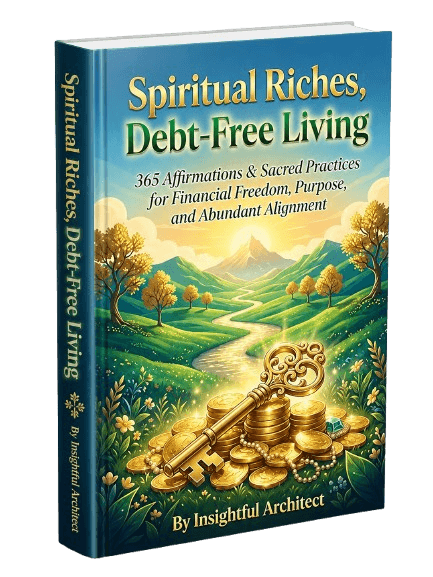 |
Embark on a transformative journey towards financial freedom and abundance with "Spiritual Riches, Debt-Free Living." This life-changing e-book offers 365 powerful affirmations and sacred practices to help you manifest prosperity, purpose, and alignment in every area of your life. Say goodbye to debt and hello to a fulfilling, stress-free existence as you learn to attract wealth and success effortlessly. Whether you're a seasoned spiritual seeker or new to the law of attraction, this comprehensive guide is your key to unlocking the riches of the universe. Embrace a life of limitless possibilities and start manifesting your dreams today! |